Walk into almost any jeweler in 2026 and ask what couples are choosing, and the oval will come up within the first minute. The oval cut has moved from a niche alternative to one of the most requested engagement ring shapes, and the reasons are practical as much as stylish. It looks bigger than a round diamond of the same weight, it flatters almost every hand, and it works in nearly every setting style.
If you are considering one, here is what actually matters when you compare stones and settings.
What Makes the Oval Cut Different
An oval diamond uses a brilliant facet pattern, which is the same basic arrangement as a round diamond. That means you get strong, lively sparkle. The difference is the outline: the stone is stretched into a smooth, elongated shape with no corners or points. Without corners, there is nothing exposed to chip, which makes an oval one of the most practical shapes for daily wear.
The elongated outline also changes how the ring sits on the hand. It runs along the finger and makes it look longer and slimmer, which is a big part of why so many people try one on and stop looking. Browsing a range of oval diamond engagement rings side by side is the quickest way to see how much the outline varies from one stone to the next.
Why an Oval Looks Bigger for Its Weight
Carat is a measure of weight, not size. Because an oval spreads its weight across a longer surface, more of the diamond is visible from above. A 1 carat oval typically measures around 7.7 by 5.7 mm, while a 1 carat round is about 6.4 mm across. In practice, many buyers say their oval looks closer to a 1.2 carat round.
That extra visible size is one reason the oval is popular with couples working to a budget. You can choose a slightly smaller carat weight and still get a ring with real presence on the hand.
Length-to-Width Ratio: The Number to Check
The ratio between length and width decides whether an oval looks slim or chubby. Most buyers land between 1.35 and 1.50, which gives the classic oval shape. Ratios closer to 1.25 look fuller and softer, while anything above 1.55 looks long and dramatic. There is no correct answer, so it helps to look at a few photos at different ratios before deciding.
The Bow-Tie Effect, Explained
Almost every oval shows a bow-tie, a darker band that runs across the middle of the stone. It happens because light travels differently through the narrow center of an elongated brilliant cut. A well-cut oval keeps that band faint and barely noticeable. A poorly cut one can show a heavy dark stripe that dulls the whole stone.
Grading reports do not measure the bow-tie, so it is important to look at a photo or video of the actual diamond. Turn it slightly and see whether the dark area stays small or spreads.
Clarity and Color Choices
Brilliant facets hide small inclusions well, so SI1 to VS2 clarity is usually clean to the naked eye in an oval. Color can show a little more at the ends of the stone. In white gold or platinum, G or H color keeps the diamond looking white, while yellow and rose gold settings let you go a grade or two lower without noticing a difference.
Settings That Suit an Oval
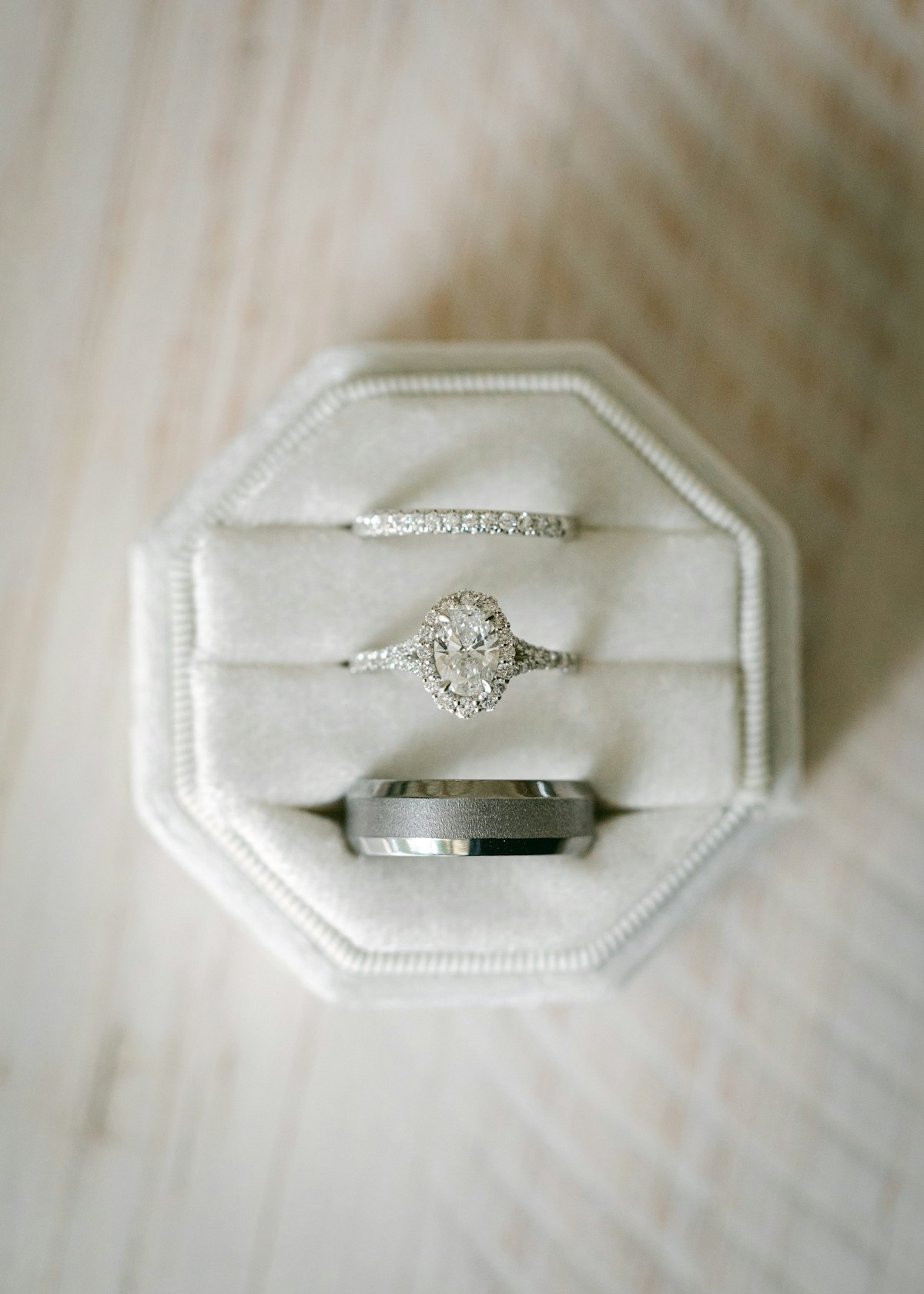
The oval is one of the most flexible shapes when it comes to settings. A simple four-prong solitaire keeps the focus on the stone. A hidden halo adds a ring of small diamonds under the center stone that you only see from the side. A full halo frames the oval and makes it look even larger, and three stone designs pair it well with pear or round side stones.
Metal also changes the mood. Yellow gold gives an oval a warm, vintage feel, while white gold and platinum make it look crisp and modern. If you are torn, compare a few oval engagement rings in different metals before you settle on a style.
Lab-Grown or Natural?
Ovals are widely available as both natural and lab-grown diamonds. Lab-grown stones have the same hardness, chemistry and sparkle as natural ones but cost significantly less, so many couples use the savings to go up in size or choose a better grade. Natural diamonds remain the choice for people who value rarity.
Final Thoughts
An oval offers bright sparkle, a finger-lengthening outline and more visible size for the money, with no fragile corners to worry about. Start by choosing a ratio you like, check the bow-tie in a real photo, and then try a solitaire and a halo to see which one feels right on your hand.